
Does Faith Lead To Altruism?
The relationship between religious faith and altruistic behavior has long fascinated theologians, social scientists, and philosophers alike, prompting fundamental questions about whether spiritual beliefs naturally cultivate selfless action toward others. By examining both the philosophical foundations and sociological evidence, we can better understand how faith traditions foster prosocial behaviors through their teachings, community structures, and spiritual practices that expand moral concern beyond the self.
Does Faith Lead To Altruism?
Does faith lead to the social virtue of altruism? Yes, faith can lead to altruism, because “The end of faith, even as of the other virtues, must be referred to the end of charity, which is the love of God and our neighbor,” as stated by Thomas Aquinas.
While charity and altruism are separate virtues, it is generally accepted that the moral virtue of charity leads to social virtue of altruism. As faith leads to charity which leads to altruism, we can safely say that, yes, faith does lead to the social virtue of altruism.
“… the tie between religion and altruism embodies the power of religious values,” as said by Robert Putnam in ‘Bowling Alone’.
And, according to a study by Nicola Etter, as religiosity increases, altruistic intentions increase, as well. See below a modified version of Etter’s Table 1.
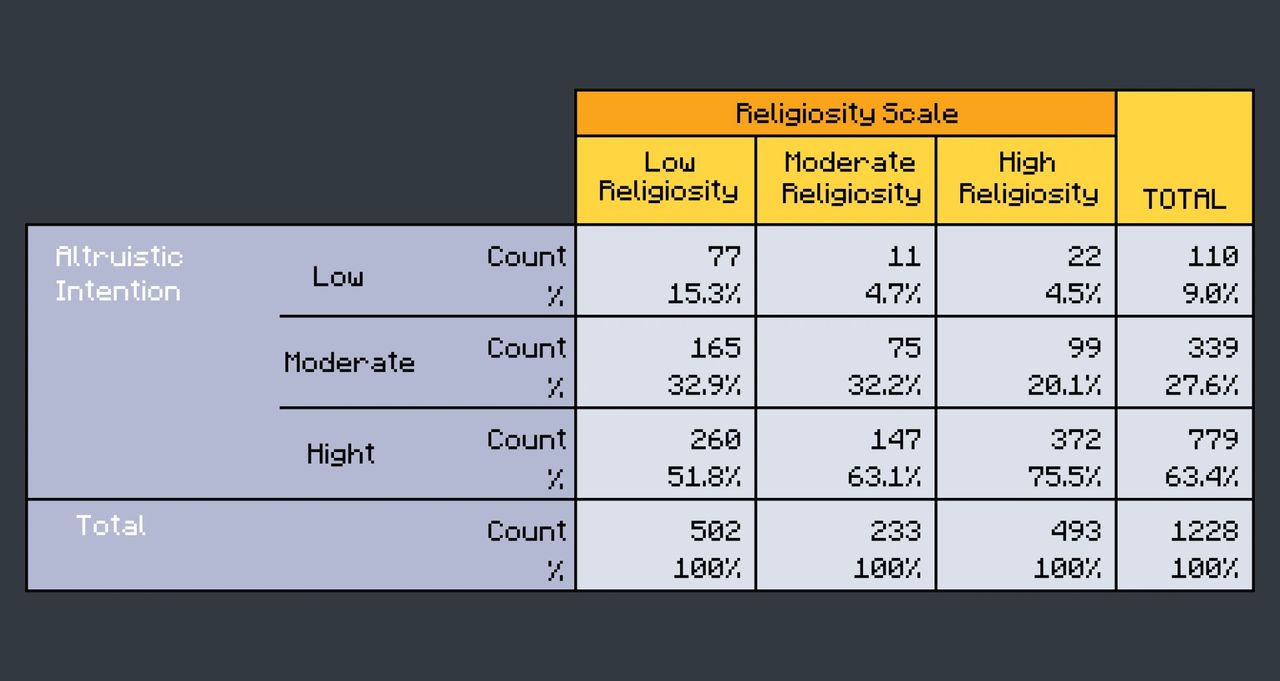
Yes, faith does lead to altruism.
Final Thoughts
The connection between faith and altruism reveals something profound about human nature – that our spiritual beliefs can translate into tangible acts of kindness toward others. While skeptics might argue that altruistic behavior can exist without religious faith (and they’re right), the evidence suggests that faith provides a particularly robust framework for cultivating selfless action.
What’s especially compelling is how this relationship operates through multiple channels: theological teachings that emphasize love of neighbor, religious communities that model and reinforce giving behaviors, and spiritual practices that expand our circle of moral concern beyond ourselves. The data from Etter’s study offers empirical support for what many faith traditions have long claimed – that genuine religious commitment naturally flows outward into service.
Perhaps most importantly, this link between faith and altruism suggests that religious belief, at its best, is never merely private or self-serving. True faith compels us to look beyond our own needs and respond to the suffering and struggles of others. In an increasingly fragmented world, this religiously-motivated altruism may be more vital than ever.
Thanks for reading!